The Guide and the Glider

Standing at the Air Force Academy watching a glider get cut loose — it hit me.

That moment when the cable releases? It's coming whether the pilot is ready or not.

Over 20 years of watching leaders, I've seen it happen time and again. One day you're in the glider seat, being guided, being shaped. The next — you're flying on your own.

Today I want to pause and ask you two things:

Look back. Who was your guide? Who held the cable steady while you found your wings? Take a moment and give them a shout out. Tag them. Send the text. Make the call. They deserve to know the difference they made.

Look forward. Someone behind you is sitting exactly where you once sat — unsure, hopeful, maybe a little nervous. Before that cable cuts loose for them, they need patience. They need grace. They need you.

As my friend and fighter pilot Dan Daetz puts it from his own flying experience:

"Ready or not, you're disconnecting from the cable at the planned altitude — clear expectations. But you're doing so within gliding distance of a landing, and with that instructor still with you all the way — set up to succeed. Because the landing itself is the tricky bit. Expect bounces early on — room to fail."

Clear expectations. Set up to succeed. Room to fail.

That's not just great aviation wisdom. That's great leadership.

Happy flying. ✈️

Focus in My Fifties - 3 Keys Towards Convergence

Sitting in sobriety this week — considering the needs of aging loved ones, my brother-in-law turning 59, looking around the table of my men's group at a few men in their 50s and 60s — and we're heading to Michigan for a funeral, to honor the memory of a man who passed at 70.

Yeah. All the strategy in the world comes to a halt when life happens.

Today, I have my grandfather's timeless words reverberating in my soul from Psalm 90: “Teach us to number our days, that we may gain a heart of wisdom.” I’m not quite in the full Ecclesiastical mindset, calling out “Vanity, vanity” — but in my sobriety, I am pausing long and hard in my fifties to ask some significant questions.

Traveling to Tulsa, I spent time with my longtime friend and mentor, Dr. Nathan Baxter, who has taught me a thing or two about coaching leaders. As our conversation unfolded over salads in 70-degree weather under his back patio, we turned to that old yet familiar concept popularized by Dr. Bobby Clinton in his landmark study The Making of a LeaderConvergence.

Nathan brilliantly affirmed and vision-casted what a focused fifties could look like — and how it sets the stage for thriving in your sixties and finishing well. He named three keys: Margin, Influence, and Intentionality.

1. Margin: The Freedom to Actually Live

Margin is the white space of your life — the unhurried room to breathe, to give, to pivot, to show up. Nathan’s peer group is men in their early sixties, and many are running hard with no end in sight: 45-plus hours a week, no passive income built, still trading time for every dollar. They’ve arrived at a new chapter with no bandwidth to enjoy it.

The danger of living without margin is subtle but devastating. It’s not just exhaustion — it’s the missed grandchild, the friend who needed you present, the inner voice you never had time to hear. The fifties, Nathan reminded me, are your premium earning decade. Your health is still strong, your kids are mostly launched, and you finally know who you are and who you are not. This is the decade to structure well, build passive income, and protect the space that lets generosity actually flow.

Without margin in your sixties, the freedom you worked toward becomes the very thing that eludes you.

2. Influence: Someone Has to Want to Sit With You

Nathan put it plainly: some men have plenty of margin but no influence. Nobody wants to sit down with them. They’ve spent decades distracted, self-absorbed, or hardened by the world’s grinding demands — and now, in the second half of life when wisdom should be most potent, no one is leaning in to receive it.

Influence is built over decades of showing up, being curious, staying humble, and staying invested in other people’s growth. The older you get, the more you want people to listen to you — but that audience is earned, not assumed. The fifties are the season to examine your relational posture: Are you someone people want more of? Do people leave conversations with you more alive, more hopeful, more equipped?

The man with margin but no influence has freedom with nowhere meaningful to point it.

3. Intentionality: Don’t Just Check Out

Nathan gestured toward a recurring image in his week: the same faces at the golf club, every single day. Men who have decided they’ve earned the right to disengage. And in one sense, they have. But in another, they’ve confused the reward of the journey with the end of the journey itself.

Bobby Clinton’s research on why men don’t finish well identifies this checking-out as one of the central reasons for an unfinished life. Men plateau not because they run out of capacity, but because they stop investing in the kingdom, stop leveraging the gifts and experience God spent decades building in them. Intentionality in your fifties means refusing to coast. It means asking hard, holy questions: What am I still being called to? Who am I being called to pour into? What does faithful stewardship of my remaining decades actually look like?

Without intentionality, margin becomes leisure and influence becomes nostalgia.

Every Day Is a Gift

My grandfather’s charge keeps returning to me. Psalm 90 is Moses’ prayer — the oldest in the Psalter — and it is breathtaking in its sobriety. Seventy years, maybe eighty. A watch in the night. Grass that flourishes in the morning and fades by evening. And then the pivot: “So teach us to number our days, that we may gain a heart of wisdom.”

Not to count our days in dread, but to number them — to treat each one as the non-renewable, unrepeatable gift that it is. Moses understood what so many of us learn too late: awareness of limits is not defeat. It is the very thing that sharpens our aim, deepens our gratitude, and produces the kind of wisdom that only comes when we stop pretending time is infinite.

Nathan reminded me: the fifties are not a holding pattern. They are the premium decade for output — the decade where everything you’ve learned, suffered, built, and become can now converge into its most focused, fruitful expression. Build the margin. Cultivate the influence. Live with fierce intentionality.

The sixties are coming. The question is not whether you’ll arrive — it’s what you’ll bring with you when you do.

So yes, today is a gift. Number it. Use it to Love and Live Well! Thank God for the gift of today!

A Decade of Conversations: From Conversationalist to Aptly

Communication Confidence - Week 1 - Conversation Starters!

It was 2015, and I was facilitating a CEO forum with fourteen leaders who had gathered for what they thought would be another typical session. Instead, I gave them something unexpected: 30 minutes, a walk-and-talk 1:1 with a partner, and one question to explore together.

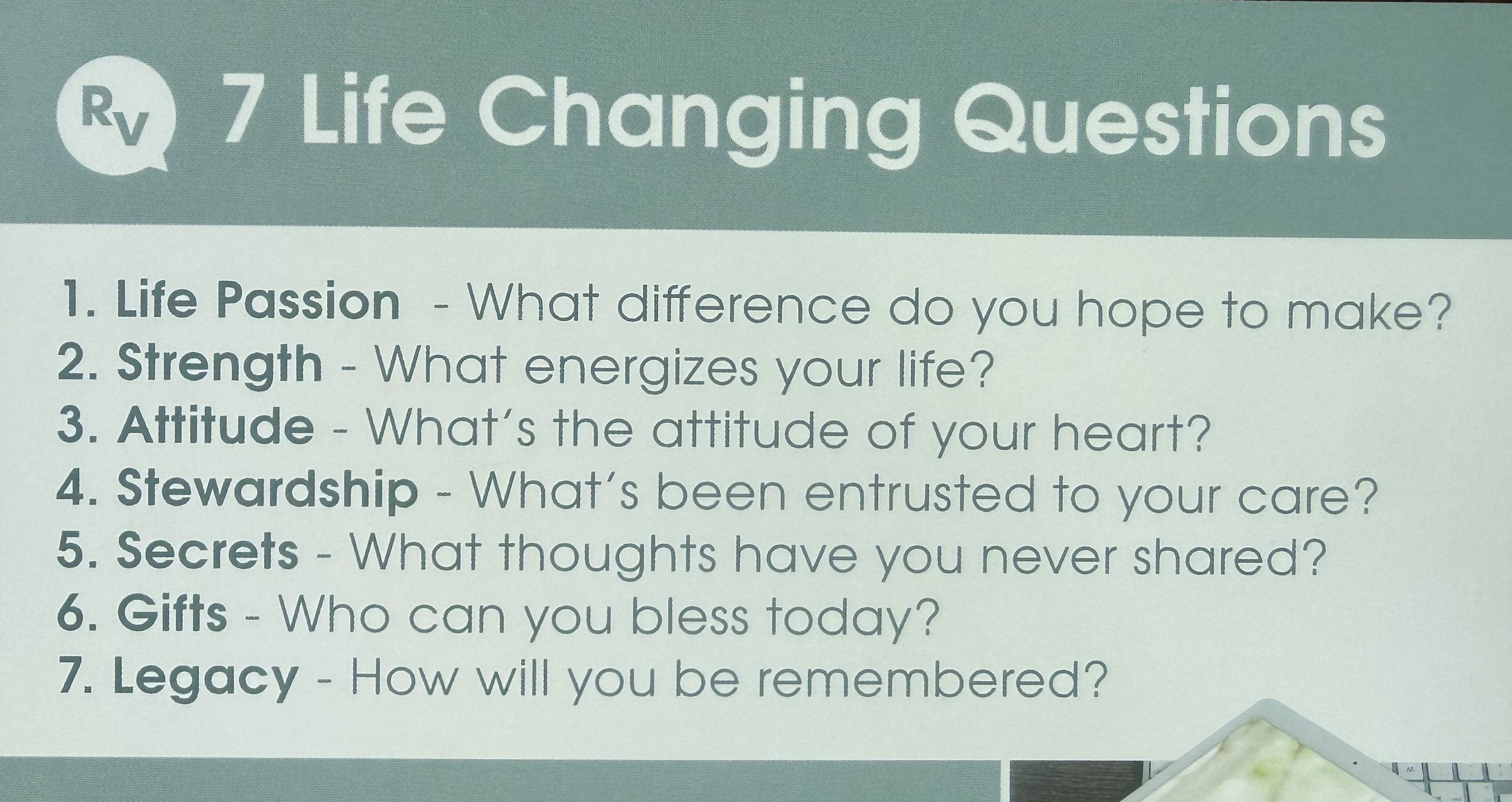
I offered them seven life-defining questions to choose from:

When those leaders returned from their walk-n-talks, something had shifted. The insights, the energy, the encouragement—it was electric. In thirty minutes, something profound had happened that rarely occurs in boardrooms: a genuine human connection. That moment birthed my first book, originally titled "Catalytic Conversations:," later published in 2016 as "The Conversationalist! Building Life-Defining Relationships One Conversation at a Time!

Here's what I didn't expect: my publisher and hundreds of readers told me the most valuable section was the 50 Questions of Conversationalist—simple prompts to spur discussion beyond news, weather, and sports. Teams used them for meeting kick-offs. Leaders for better one-on-ones. Families at the dinner table.

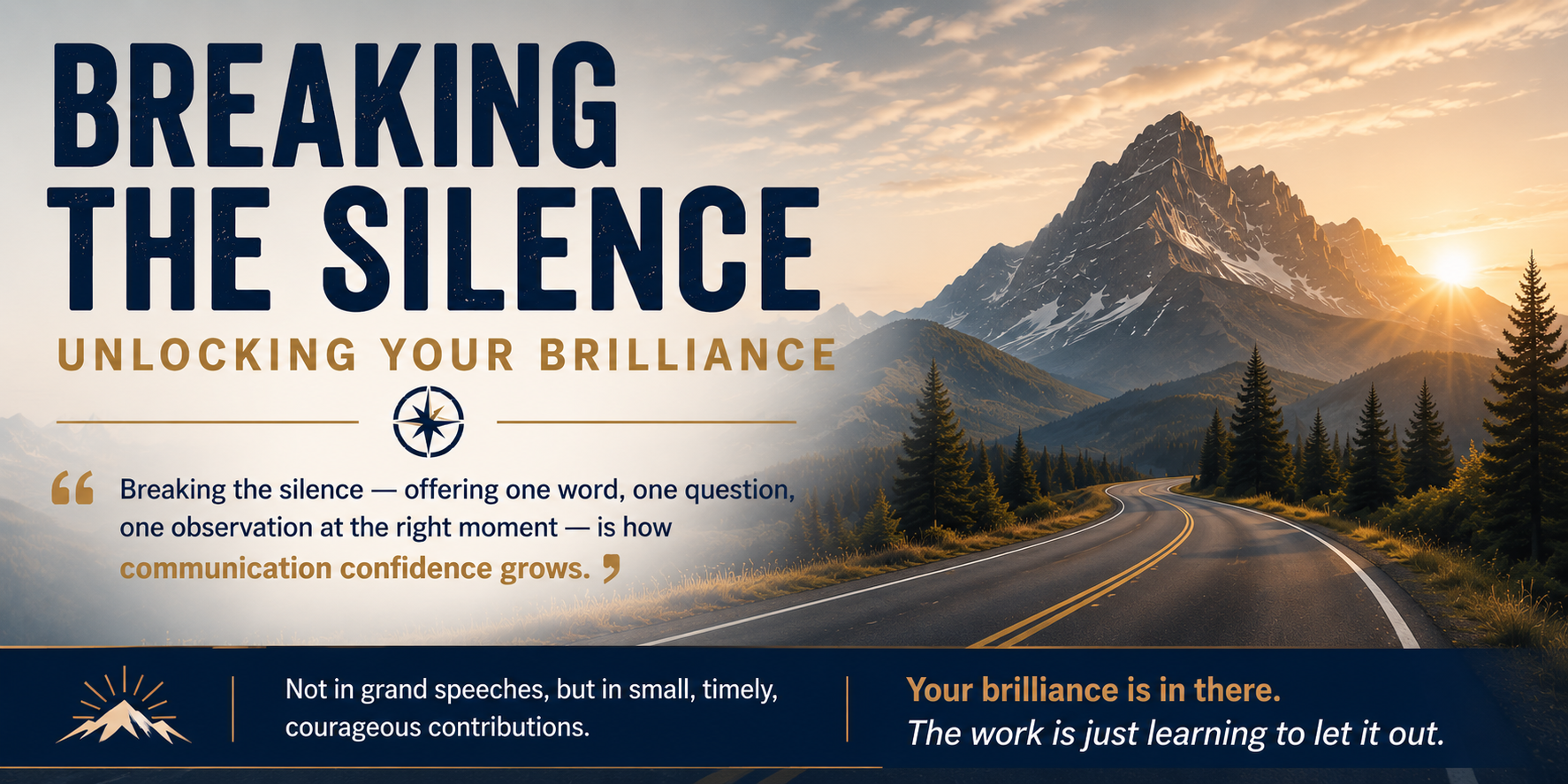
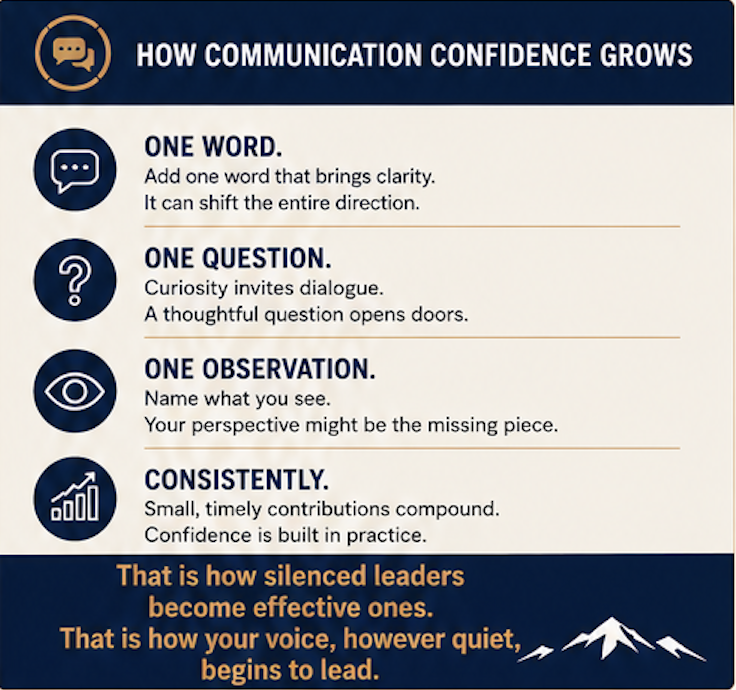
But over a decade of coaching, mentoring, and training leaders, I noticed something troubling. People weren't struggling because they lacked good questions. What they lacked was Communication Confidence—the ability to respond with clarity, presence, and conviction when it mattered most.

That realization changed my focus helping leaders communicate more effectively!

During my doctoral studies, I took an empirical approach to understand the social and psychological barriers keeping people from connecting authentically. Why do capable leaders freeze in crucial conversations?

What's happening beneath the surface when communication breaks down?

The answers I discovered in research and while working in the leadership lab training over 1,000 leaders across 100+ sessions, form the foundation of Aptly—a one-day intensive designed to help you respond with confidence in your leadership. We're bringing this program privately to organizations team and offering several open programs in 2026. Dates and details coming soon.

Over the next few weeks, I'll be sharing six insights from this decade-long journey—from executives' walk-n-talks to doctoral research that revealed what's really holding us back. You'll discover why trust is the hidden foundation of every conversation, how to listen at a level most people never reach, and what it takes to move from knowing what good communication looks like to actually embodying it in real time.

But here's what I want you to know today: you don't have to wait for a training program to start making a difference. Right now, wherever you are, you can choose to be intentional with the people you meet.

  • Pause for a moment

  • Be present

  • Listen deeply

  • Ask a few timely questions.

You never know the impact it will have on your relationships at work or at home.

Next week, I'll share why even the best communication skills fail without one critical foundation that most leaders overlook. Until then, I challenge you to lean into one of the 7 Life Questions or one of the 50 that might be worth exploring in your next conversation?

Finding Your True North - Prayer and Perspective for 2026!

Unsplash @nitishm

I love coaching and mentoring! The discovery, the breakthroughs, the transformation that unfolds when someone commits to change over time—these are the moments that fuel my joy. While inspiration and epiphanies are wonderful to witness, what truly moves me is watching courage and dedication translate into lasting change. And then, celebrating together when someone reaches their destination? That’s pure joy.

What motivates us to pursue change remains something of a beautiful mystery. We’re holistic beings driven by survival, connection, meaning, purpose, and spiritual grounding—all while seeking the joy of progress along the way. Each sunrise offers hope for something new, fresh, and fulfilling.

Yet we’re also bound by realities that hold us back: limiting beliefs, clouded thinking, tangled emotions, and battles with our past. We’re complex, messy people carrying failings, weaknesses, and regrets. But here’s what amazes me: we possess unbelievable capacity, resilience, and reserves to press forward anyway.

For over fifteen years, my mornings have begun with prayer, reading, and reflection—pursuing perspective, wisdom, and courage for the day ahead. My longtime prayer is simple: “Father, give me the wisdom to work, courage to lead, and faith to believe.” This prayer reveals who I hope to become. More than any achievement, I want to be known as a man of faith, wisdom, and courage.

Now in my fifties, I’m more focused on the person I’m becoming than what I hope to accomplish. Yes, I have goals and places to go, but character matters most.

As you pursue your goals this year, I’m one of your biggest cheerleaders! But I encourage you to reflect: Why do these pursuits matter? How will they shape who you’re becoming?

Last year, I created the True North resource to help you reflect on your focus for the year. As we step into 2026, may it guide your journey toward authentic growth.

Happy New Year!

Download the TrueNorth Guide. Go to www.theadvance.net/truenorth

Paradigm Shift in Defining Success Starts With Building People

Standing in Kansas City after wrapping up an executive coaching session, I'm struck by a powerful pattern I've observed throughout my travels—from Houston to Phoenix to Michigan. Working extensively with construction industry leaders, I've witnessed a fascinating phenomenon that defines the difference between operational excellence and true executive leadership.

UnSplash @markpot123

Unsplash @markpot123

In construction, success is tangible. You can see the buildings rise, touch the materials, and measure the impact of projects that leave a global legacy. Executives in this industry oversee billions of dollars in scope, making decisions that affect communities and stakeholders worldwide. The competency that got them to this level is clear: an exceptional ability to deliver projects on time, on budget, and with lasting impact.

Yet here's the paradox: the very skills that earned these leaders their executive seats can become obstacles to their success at that level.

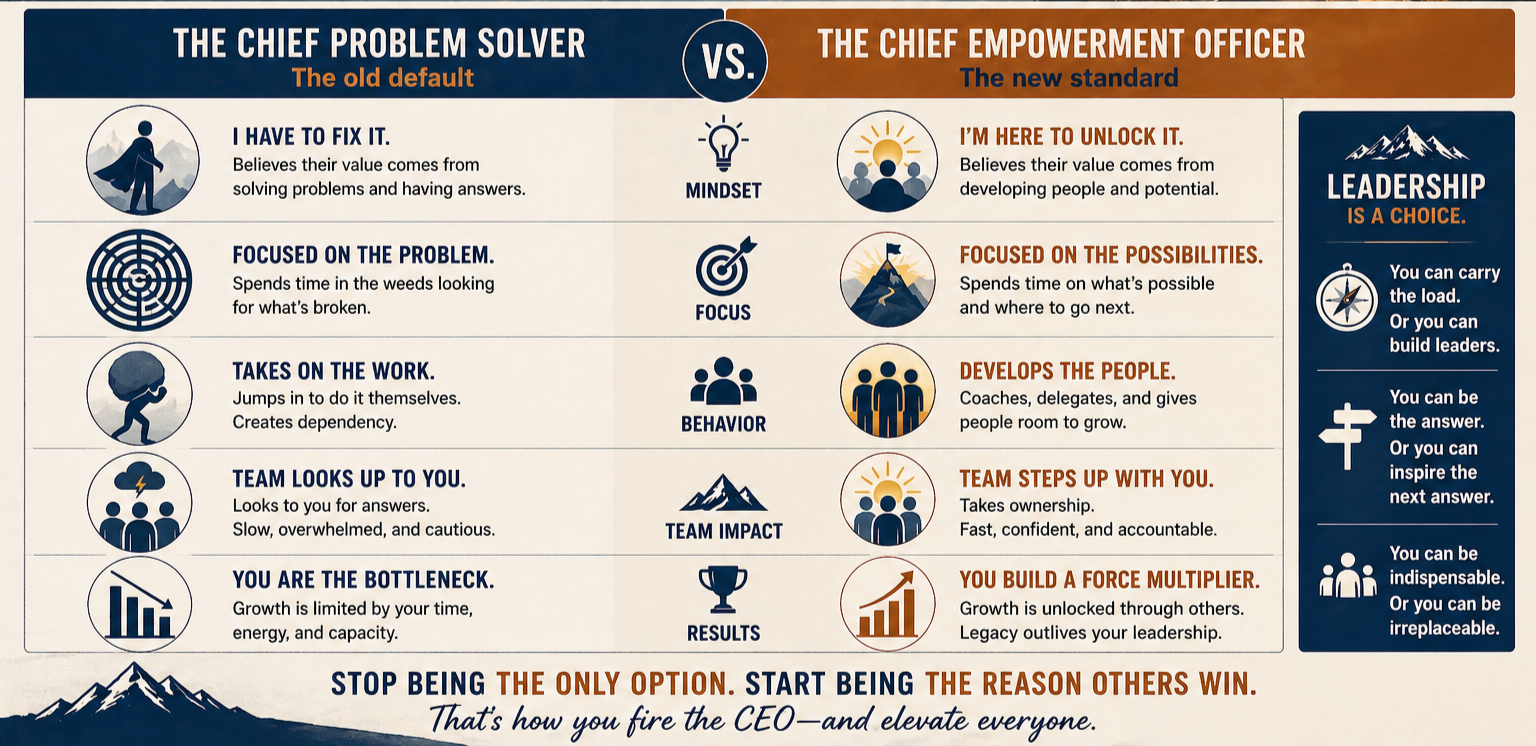
The fundamental shift required at the executive level isn't about building bigger projects or managing larger P&Ls—it's about reimagining what success means entirely. Instead of being the person who gets the work done, executives must become the person who builds the people who get the work done. This transformation represents a complete mindset revolution.

Too often, leaders remain trapped in their previous definition of success. They focus on the immediate work, the tactical decisions, the daily firefighting. But executive leadership demands something different: championing vision, communicating strategy, and most critically, developing and empowering teams.

Unsplash @judmackrill

This isn't just semantic wordplay. It's the difference between being a highly skilled doer and being a multiplier of talent. When an executive truly embraces their role as a people-builder, their impact exponentially increases. Instead of being limited by their own capacity, they unlock the potential of dozens, hundreds, or thousands of people across their organization.

3 Paradigm Shifts to Make the Transition

1. Measure Development, Not Just Delivery Stop tracking only projects completed. Start measuring how many people you've promoted, decisions you've delegated, and capabilities you've built in others.

2. Coach, Don't Solve When problems arise, resist providing immediate answers. Ask: "What options have you considered?" "What would you recommend?" Build their thinking, not just results.

3. Protect Development Time Block recurring weekly time exclusively for coaching and mentoring. Treat it as non-negotiable as any billion-dollar meeting—because developing future leaders delivers exponential value.

The question every aspiring executive must ask themselves is profound yet simple: What does success look like at the next level of leadership? True executive success is measured by the capability, confidence, and competence of the people you develop.


At The Advance, we work alongside leaders like you to turn vision into reality—whether that's redesigning your organization, elevating your leadership impact, or achieving the goals that matter most.

Ready to make 2026 your breakthrough year by building yourself and your people? We can help from executive coaching, team building, to leadership design for your entire organization. Let’s start a no-pressure conversation: russell@leadersadvance.net
Finding Your Executive Edge: Lessons from the Mountain

Standing at the top of Black Diamond Edge at Keystone, Colorado, I paused before my descent. The irony wasn't lost on me—here I was, literally on the edge of a challenging run, reflecting on what I've been calling the "Executive Edge" for nearly a decade. Sometimes the universe hands you the perfect metaphor.

It's Friday afternoon. You're likely staring at a daunting to-do list, year-end deadlines bearing down, and Christmas shopping that hasn't even started. You're running thin, reactive, in pure get-it-done mode. But here's the problem: when your head's down, how can you possibly see where you're going, how you'll get there, or guide your team along the way?

After more than a decade as a thought partner to executive leaders, I've observed something critical: the most effective leaders are ruthlessly shrewd with their time and commitments, keeping first things first. They understand their Executive Edge.

The Three Priorities That Define Your Leadership Edge

Your executive effectiveness comes down to three core priorities:

  1. Champion a Vision. Great leaders don't just have a destination in mind—they paint it so vividly that others can see it too. They create clarity about where the organization is headed and why it matters.

  2. Communicate the Strategy. Vision without strategy is just dreaming. Effective leaders translate that vision into a clear roadmap, ensuring everyone understands not just the destination, but the route.

  3. Develop a Team to Execute. The best strategy means nothing without the right people executing it. Elite leaders invest heavily in building and developing teams that can turn plans into reality.

The 60-80% Rule

Here's my proposition: your Executive Edge is defined by spending 60-80% of your time in your sweet spot—those activities that have the most significant impact on you, your team, and your organization. Everything else? That's not your edge. That's erosion.

Your Challenge This Week

Take a hard look at your calendar from the last week or month. Where did your time actually go? How much was spent championing vision, communicating strategy, and developing your team? How much was consumed by urgent but less important tasks, meetings that didn't need you, or decisions that could have been delegated?

This exercise isn't about judgment—it's about recalibration. It's Friday afternoon, and yes, the pressure is real. But sometimes the most productive thing you can do is stop, step back, and recalibrate your focus. Find some space to realign your time, energy, and perhaps even how you define success for this season.

Standing at the edge of that Black Diamond run, I had to assess the terrain, trust my preparation, and commit to the path ahead. Your leadership requires the same courage.

Your leadership confidence for the mountain you’re facing maybe at the Green or Blue level. Yet, if you have a sense of what’s before you, project, goal, and your next role for 2026, then you maybe heading towards your next level, Black or Double Black. It can be overwhelming facing new terrain!

If you're looking for a thought partner to help you find and sharpen your Executive Edge, let's explore how coaching might serve you in this next season. After all, every leader deserves someone in their corner helping them see clearly and lead boldly. If that’s you, let’s explore a free no hassle conversation. We have a team of 10 ICF executive/leadership coaches ready to support you and your team. Feel free to reach out directly to me! russell@leadersadvance.net
Now if you'll excuse me, I have a mountain to conquer.

The ROI of Leadership Development: Beyond the Numbers

Standing in Phoenix after working with 80 leaders who hadn't received leadership development in over a decade, one truth became crystal clear: organizations who invest in their leaders are better than those who don't.

The Hard Evidence

The research is compelling. Companies that invest in leadership development see a 25% increase in employee engagement and up to 50% reduction in turnover according to studies by Gallup and the Center for Creative Leadership. Deloitte research shows that organizations with strong leadership pipelines are 2.4 times more likely to hit performance targets and see 34% higher employee retention rates.

The ROI is undeniable: for every dollar invested in leadership development, organizations see an average return of $7 in productivity gains.

The Soft Evidence That Matters Most

But what you can't fully measure in spreadsheets is equally powerful. Today, we witnessed the transformation—faces that entered with skepticism left with genuine smiles. Laughter filled the room. Leaders who had worked together for years experienced breakthrough conversations for the first time.

High-trust environments emerged through facilitated vulnerability. Conflicts that had lingered for months found resolution in hours. The question shifted from "How do we not know this?" to "How do we pay this forward?"

These are the force multipliers that cascade through organizations: faster decision-making, stronger collaboration, and psychological safety that drives innovation.

Your Next Step

Whether you're a board looking to align vision, an executive team needing strategic cohesion, or a department requiring an infusion of people capital horsepower—2026 is your year.

The commitment doesn't require perfection. It requires starting.

Consider a discovery conversation to explore what's possible when you invest in your leaders. Because organizations that develop their people don't just perform better—they become places where breakthrough happens daily.

Ready to move your team to the next level of performance? Let's talk.

russell@leadersadvance.net

Wisdom on the Way - Career Transition Backstory

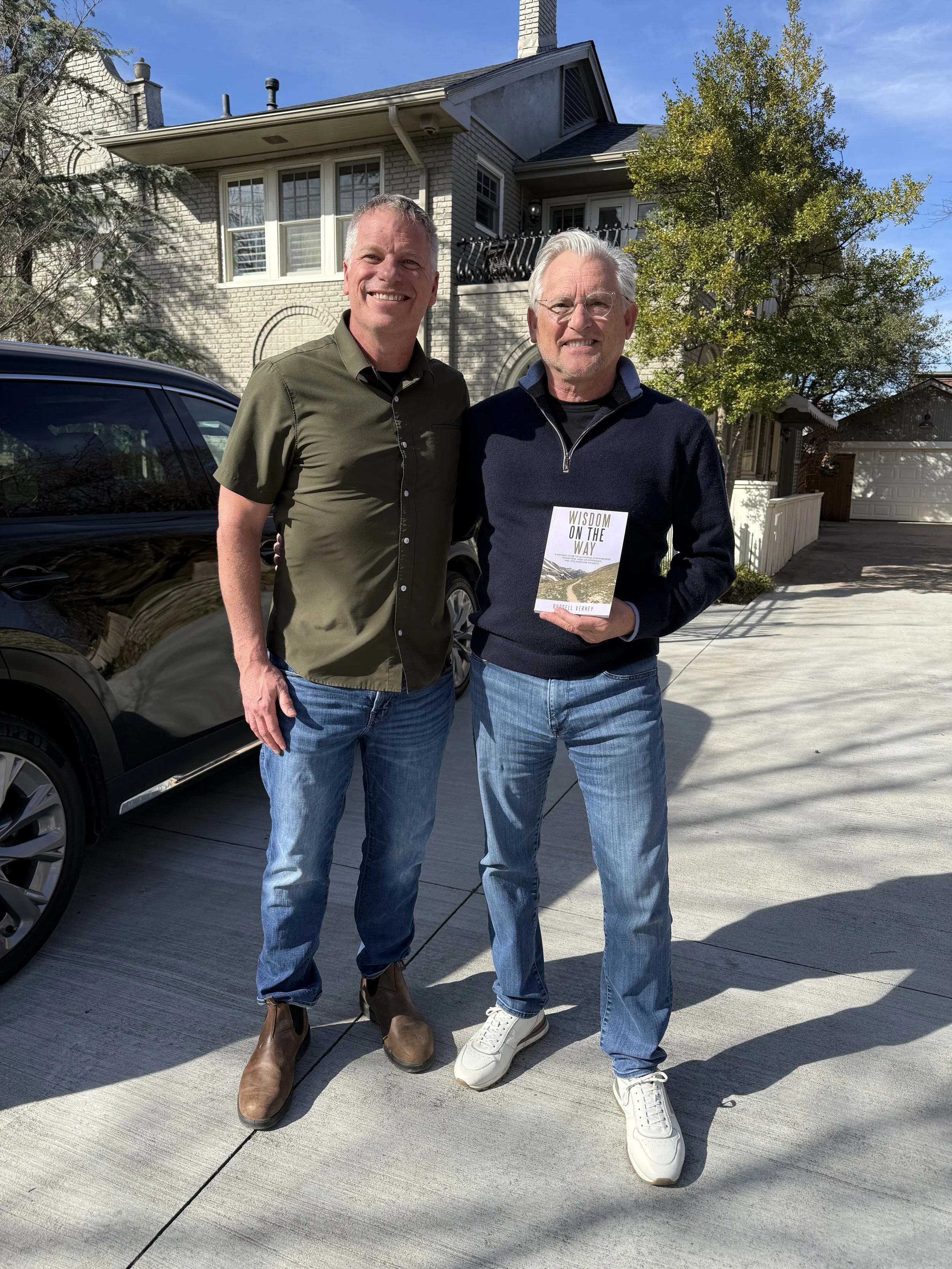
Exciting news! Wisdom on the Way is now available on Audible!

For nearly 15 years, I sold office furniture from a warehouse, wondering what actually happened in the meetings around those conference tables I'd never personally sat at. In my late thirties, I had my "oh God moment" in the back of that warehouse—a solid midlife crisis and a defining turning point that launched my career transition in 2010.

That season of uncertainty and searching became the soil for something beautiful. —I began to dream again imagining a different future, one where I could actually be part of those transformational moments.

By 2012, I began writing what would become Wisdom on the Way—a collection of devotionals inspired by the book of Proverbs and my own milestone moments. Each reflection captures lessons learned during that transition and the journey that followed.

Today, nearly 15 years later, I facilitate leadership training at places like the Center for Creative Leadership. I guide leaders through their own defining moments at those conference tables and on mountain walks I once only imagined experiencing. The transformation has been profound.

This book is my invitation to you—wherever you are in your life or leadership journey, whether you're in your own warehouse moment or walking mountain paths, I hope you'll find encouragement, wisdom, and hope in these pages.

Get your copy of Wisdom on the Way here!

Stress or Distress: A Leader's Choice

Unsplash @ @jeshoots

Insights from a Cohort of Master Facilitators

It's a privilege to be part of a cohort of master facilitators dedicated to developing leaders who can thrive in high-pressure environments. Our recent conversation centered on a critical distinction: stress is inevitable, but distress is a choice. The question isn't whether leaders face stress—they always do—but how they respond to it.

The Foundation: Two Kinds of Stress

Hans Selye, the pioneering endocrinologist who introduced the concept of biological stress in 1936, distinguished between "distress" (negative, destructive stress) and "eustress" (positive, growth-producing stress). As one facilitator noted, "Stress is a fact of life. You are going to be in stressful environments nearly all the time." The critical variable is whether we choose to be distressed in the midst of it.

Our group explored this through a striking case study: a field operations supervisor who, when facing any stressful situation, would retreat to a hotel for days to recover. "I didn't know how he even survived being a manager," one facilitator reflected. The contrast? Leaders who emerge energized from stress—those who view challenges as opportunities to make better decisions, engage more people, and become more observant.

The Neuroscience of Attention

Dr. Amishi Jha's research with military personnel reveals how stress hijacks our attention systems. She describes three attention modes: the flashlight (focused concentration), the floodlight (broad awareness), and the juggler (executive function). Under stress, especially when we're constantly in hypervigilant "floodlight" mode, our cognitive resources become depleted, making clear thinking nearly impossible.

The encouraging news? Jha's studies show that just 12 minutes of daily mindfulness practice can stabilize attention even under intense stress. For military personnel preparing for deployment, this practice made the difference between degraded performance and maintained—even improved—focus.

Practical Tools for the Tactical Pause

Our cohort discussed two powerful techniques leaders can use immediately:

Box Breathing (The Navy SEAL Technique)

  • Inhale through your nose for 4 counts

  • Hold your breath for 4 counts

  • Exhale through your mouth for 4 counts

  • Hold empty for 4 counts

  • Repeat for at least 5 minutes

This four-by-four pattern shifts the body from "fight or flight" to "rest and digest," creating an alert, grounded state. As one facilitator noted, "I tie it to Navy SEALs using it when they're breaching a building, so why can't you use it?"

The Personal Tactical Pause

One participant shared a framework they teach regularly:

  1. Begin with one minute of box breathing

  2. Ask four questions:

    • What am I feeling right now? (physically and emotionally)

    • What am I believing that's causing these feelings? (about myself, others, and the situation)

    • What's the truth? (from the perspective of someone wise)

    • What's the most important thing to do right now, based on the truth?

This process works because, as the facilitator explained, "What I'm believing in the moment isn't the truth, especially when I give voice from a different perspective."

The Work of Transformation

Our conversation acknowledged that neural pathways formed in chronically stressful environments create default distress patterns. Yet neuroplasticity research shows these patterns can change. One colleague's testimony was powerful: "I used to be an extremely stressful person... I talk to myself when I find myself in a difficult situation. I don't need to be this way. And it's really helped out a great deal."

The key is identifying trigger points—those situations where stress most readily becomes distress. We help leaders ask: "What was it about that situation? What were you trying to protect? What value was being threatened?" Often, overwhelming stress signals a threat to something we hold dear: competence, justice, control, or safety.

Building Capacity Over Time

Leadership development requires patience. As our group agreed, we plant seeds through workshops, reinforce them in one-on-one sessions, and trust that "those seeds will continue to be watered." The goal isn't to eliminate stress, but to build the capacity to choose our response.

As Selye wrote, "Stress is the spice of life." Our work as facilitators helps leaders experience that spice without being overwhelmed—to use stress as fuel for growth rather than allowing it to become a poison. That's the privilege of serving leaders in an increasingly complex world.

For Leaders: A Simple Daily Practice

  • 5 minutes of box breathing

  • 5 minutes of breath-focused meditation

  • 2 minutes reflecting: "Where did my attention go today?"

When stress rises, deploy the Personal Tactical Pause. With consistent practice, what once triggered distress can become an opportunity for growth.

Wisdom on the Way - A Decade in the Waiting

I'm beyond excited to finally share Wisdom on the Way with you—a book that's been fifteen years in the making. Honestly, I never imagined it would take this long, but maybe that's exactly the point.

Back in 2010, I was in one of the darkest seasons of my life. My business was struggling through a financial crisis, and I found myself at a career crossroads, desperately searching for direction. I was that guy sitting in the back of my warehouse, crying out to God for wisdom because I had run completely out of my own answers. During those difficult months, I started writing daily devotionals from Proverbs—not as an author with a grand plan, but as a desperate man clinging to God's promises.

What began as my personal lifeline became this manuscript. But then life happened. The crisis passed, and new opportunities emerged; the manuscript sat in a drawer for nearly a decade. I thought that season was just for me, that those writings had served their purpose.

Then came 2020 and another crisis—this time a global pandemic that shut down my coaching business overnight. In that season of uncertainty, God whispered that it was time to finish what I'd started. Completing this book became a personal milestone of faithfulness for me.

Wisdom on the Way guides you through 83 devotionals rooted in Proverbs, interwoven with eight milestone moments from my journey—from transformative love at fourteen to entrepreneurship, fatherhood, significant life changes, and career transitions. Each devotional offers biblical insight, personal stories, and practical application for wherever you find yourself today.

My hope? That no matter your season—whether you're in crisis or celebration, confusion or clarity, starting out or finishing strong—you'll find wisdom waiting for you on the way. Because here's what I've learned: wisdom isn't just for when we arrive at our destination. It's found in the pursuit, one step at a time, trusting that God directs our paths even when we can't see where we're going.

That's the journey I'm inviting you into. Let's walk this path together.

Transforming One-on-Ones: The E3 Framework for Meeting Excellence

Unsplash @wocintechchat

Rate the quality of your last one-on-one meeting on a scale of 1-10.

If you're honest, many leaders would score their meetings somewhere between 4 and 6—adequate but uninspiring. If you're unsure of the score, ask your direct reports the same question. It might level-set your awareness of their experience with your 1-1. There's always a drift towards ineffective 1-1, not necessarily from intention, but from the realities of your time and energy. Your relentless work environment has led to one-on-ones devolving into rushed status updates, squeezed between back-to-back meetings, leaving both managers and direct reports feeling drained rather than energized.

The pace of work demands has created a "check the box" mentality where these critical conversations become administrative tasks rather than transformational opportunities. Meeting fatigue is real, and many leaders find themselves mentally preparing for their next crisis while sitting across from team members who need genuine attention and support.

Yet recent coaching conversations with experienced managers reveal a path forward. The E3 Framework—Energy, Engagement, and Effectiveness—can transform your most dreaded meeting into the highlight of your team's month with minimal additional time investment.

Energy: How Do You Both Feel After the Meeting?

Aleks, a pharmaceutical team leader, noticed she left one-on-ones feeling frustrated while her team members seemed withdrawn. The problem wasn't effort—it was energy management. She was bringing stress and impatience into conversations, creating a dynamic where introverted team members shut down.

The solution involved intentional energy preparation. Before each meeting, ask yourself: "What stress am I carrying into this conversation?" Take three minutes to reset mentally. Consider your team member's energy style—do they need time to process, or do they feed off quick exchanges?

One manager began blocking 15 minutes before each one-on-one specifically for mental preparation, transforming his scattered mindset into focused presence. The energy shift was immediately noticeable to his team.

Engagement: Creating Mutual Balance

Traditional one-on-ones suffer from information dumps where managers talk 80% of the time while team members provide minimal responses. Aleks discovered that her 80-20 talking ratio was hindering engagement with her introverted team members, who required more processing time.

Higher engagement requires becoming comfortable with silence and shifting from interrogation to exploration. Instead of "Where are the numbers?" try "What would make you excited about our next one-on-one?" or "What support do you need to feel confident in your current projects?"

Jon, a manufacturing manager, revolutionized engagement by sharing his expectations in writing beforehand, then using meeting time for collaborative problem-solving rather than one-way information transfer.

Effectiveness: Measurable Impact Beyond Status Updates

The most common one-on-one trap is confusing activity with progress. Effective meetings create measurable impact through three elements: clarity, growth, and accountability.

Jon established four core themes for effective 1-1 project management, collaboration, feedback, and strategic thinking, which guided every conversation. This framework moved discussions from transactional ("What did you do?") to transformational ("How are we growing together?").

Effectiveness requires following through consistently. The worst mistake leaders make is declaring new meeting intentions without sustaining them. Your team will quickly revert to minimal engagement if they sense another management fad.

Implementation: Small Changes, Big Impact

Start with one element: Energy preparation before your next three one-on-ones. Notice the difference in conversation quality. Then experiment with engagement techniques like asking what success looks like from your team member's perspective.

The goal isn't perfect meetings immediately—it's incremental improvement that compounds over time. A team member recently told their manager, "This was the first one-on-one where I felt truly heard." That's the difference between checking boxes and creating transformation.

Your team members crave meaningful connection and growth opportunities. The E3 Framework provides a practical path to deliver both while actually reducing your stress and increasing impact. The question isn't whether you have time for better one-on-ones—it's whether you can afford to keep having ineffective ones.

Sojourning to the Summit: Completing Colorado's 58 Fourteeners

After 14 years of steady pursuit, the moment finally arrived—standing atop Colorado's Uncompahgre 14,318’ peak, overwhelmed by what can only be described as pure euphoria. Euphoric—a feeling of intense excitement and happiness—captures part of it. Still, my interpretation runs deeper: a sense of being "full-hearted," where gratitude, accomplishment, and profound connection converge into something that transcends mere joy. The completion of all 58 of Colorado's fourteeners wasn't just a personal milestone; it was a testament to answered prayers, perseverance, family bond, lifetime friendships, and the awe and beauty of the mountains.

After completing six summits this summer, my last five peaks were before me, starting with a train ride into Chicago Basin from Durango. The trek wasn't a spontaneous adventure—the train tickets were purchased back in February, a leap of faith that everything would align: weather, health, and timing. The final push unfolded as a carefully orchestrated two-part excursion. First came four extraordinary days in the backcountry, riding the historic 140-year-old Durango to Silverton steam train into the wilderness, then summiting four peaks while experiencing every form of weather imaginable—from bone-chilling 30-degree mornings after a nighttime hail storm to a pleasant 65-degree sunny afternoons. The 3 day backcountry venture was followed by driving around to Lake City to meet family and friends for one final, gentler summit that would include our Golden retriever, Winston.

The most magical moment came on the third of four peaks, when threatening weather surrounded us on all sides. Within a 30-mile radius, every visible mountaintop was being hammered by rain, thunder, and lightning—except for our summit, Mt Eolus. We stood in brilliant sunshine with the sun warming our shoulders, feeling divinely protected while nature's fury raged around us. It was a moment that demanded gratitude and left us saying, "Thank you, Lord."

The fourth peak brought its threat as "dipping dots"—that unique high-altitude hail that resembles candy store treats—pelted us during our final ascent. After an exhausting 11.5-hour hiking day, my 27-year-old hiking companion, whom I'd been mentoring for a year, had the inspired idea of a cold plunge in the ice-cold mountain river. It had rained on us the entire descent, but remarkably, the sun broke through just 20 minutes before we reached camp. We both dropped into that frigid water for five minutes, then sat warming ourselves on the sun-heated rocks—a complete total refresh.

The train journey itself added nostalgic layers to the adventure, skirting 500-foot cliffs and hugging the water's edge along the same route I'd traveled with my brother 32 years earlier. Those memory-filled moments on the rails deepened the emotional significance of an already profound expedition.

Standing on that final peak, I was surrounded by the people who matter most: my wife Cari, my 25-year-old daughter Bethany—a living miracle after spending three days in a hospital bed just months earlier battling lupus—my oldest daughter Ellie, my son-in-law, and a dear young couple, with him celebrating his first 14er summit. Watching my daughter conquer that mountain after her phenomenal recovery over six to seven months brought tears of joy during our tender Sunday ascent. Remembering hiking with my oldest daughter, Ellie, on Mt. Elbert in 2011 brought more joyful tears. Looking across the endless sea of Colorado's high country, I was overwhelmed with gratitude, joy, satisfaction, and praise to God for His grace along the way. This pursuit, which began 14 years ago when my children were younger, had become a thread woven through the fabric of our family's story—marking milestones, creating memories, and now celebrating the summit finish together.

The joy of the summit comes whether it's your first or your 58th.

What's your summit?

Your pursuit of a goal may not always feel euphoric. Yet, in the pursuit of your peak, you can enjoy the journey, the conversations with your companions, the gratitude for the ability to pursue your next peak, and the faith-filled moments that nourish your soul along the way.

Happy sojourning to your summit!

Pursuit of Success in Your Season

Unsplash @foxxmd

Those who aspire but never attain—midlife questions in the seasons of achievement

Have you ever been told you're going to do "great things" but left wondering what exactly someone saw in you that you can't see in yourself? Perhaps teachers, coaches, or mentors were early champions of your potential, speaking words of destiny over your future. Yet decades later, despite external success, you carry an elusive sense that you've never quite met the mark of that potential, never fully measured up to what others believed you could become.

As an act of vulnerability, I'll share my own story of chasing success in pursuit of someone else's expectations, only to feel as if I fell short, disappointing them and myself. For years, I hid behind the regret of not completing what I set out to do, holding onto the shame of not finishing what I started.

My years as a Boy Scout were filled with summer camps, weekend adventures, and multiple 50-mile treks. I earned dozens of merit badges, filling my sash, moving through the ranks to Senior Patrol Leader. Ironically, I arrived at the rank of Life—one step before Eagle Scout—with only the service project requirement remaining. Then our family moved to a new area. I rejoined another troop, yet never took that final step to Eagle Scout.

This became a mark of regret that has, at times, created an unhealthy drive toward my goals, as if achieving other things could somehow compensate for that unfinished chapter. Yet in hindsight, to say I "failed" as a Boy Scout isn't true. Those experiences shaped countless characteristics during my coming of age, influencing my love and lifestyle of the outdoors that continues today.

This pursuit of success to satisfy internal questions reveals something profound about how we measure achievement. Our criteria for success evolve dramatically with each decade and season of life. Reflecting on this evolution can be a transformative and empowering experience. Let me propose some thematic observations I see from my life and walking alongside those in pursuit of success.

Markers of Success by Decade:

  • Twenties: Landing the right job, hitting income targets, establishing independence, proving competence

  • Thirties: Career advancement, recognition, building something significant, accumulating achievements

  • Forties: Making a meaningful difference, leaving a mark, questioning legacy, deeper relationship connections

  • Fifties: Wisdom over achievement, mentoring others, authenticity over image, enjoying the fruits of earlier labor

  • Sixties and Beyond: Relationships over accomplishments, leaving something valuable behind, peace with the journey

What remains constant is the human tendency to place our sense of worth in external validation rather than internal clarity about what matters to us. The Boy Scout trail taught preparation and perseverance. Still, life teaches us that our deepest satisfaction comes not from completing every badge, but from how the journey shapes our character and values.

The executive who measures success only by revenue growth misses the satisfaction of developing team members. The leader focused solely on the next promotion, overlooking the daily opportunities to solve problems, build relationships, and create positive change. The parent obsessed with their children's achievements might miss the simple joy of being present in ordinary moments.

Reflective Questions for Your Season:

Before rushing toward the next goal, consider these questions:

  • What were you told you'd accomplish that still haunts you today?

  • How has your definition of success evolved over the past decade?

  • What external achievements are you pursuing to answer internal questions?

  • When did you last feel genuinely satisfied with your daily work, regardless of outcomes?

Next Steps to Define Success for Your Season:

Start with Values: Identify your top five core values. Not what you think they should be, but what actually drives your sense of meaning and satisfaction. These become your TrueNorth when external pressures try to redefine success for you.

Find Joy in Small Wins: Begin noticing and celebrating micro-achievements daily. The difficult conversation handled well, the moment of genuine connection with a colleague, the problem solved creatively—these matter.

Practice Gratitude: Dedicate five minutes each morning to a gratitude journal. Write down what brought you satisfaction the previous day, what you enjoyed, and what felt meaningful. This isn't toxic positivity; it's emotional fitness.

Look for Themes: After a few weeks or months, review your entries. What patterns emerge? What consistently brings you joy or satisfaction? These themes reveal your authentic criteria for success in this season.

Find a Guide: After your reflection, seek out a trusted friend or mentor to walk with you. Share your discoveries and invite accountability. Success in any season is rarely a solo journey. Having a mentor can provide you with the support and guidance you need to navigate your personal journey.

The Challenge and Encouragement:

Where you've faced regrets from the past, I challenge you to reframe success. Disappointments can lead to life's most significant appointments. Consider how those 'incomplete' experiences shaped who you've become. Define success for today based on your current values and season, not yesterday's unfinished business. This is not about compensating for past regrets, but about honoring what matters most in this chapter of your life.

A Lifetime of Running Redline- Timeless Wisdom for Leaders Running on Empty

Fishing at our family reunion - St John Kansas

"There you go again, Russell, burning the candle at both ends." Those words from my stepdad echoed through my twenties like a persistent alarm I kept hitting snooze on. As a young man with dreams of conquering the world, I dismissed his caution as the voice of someone who didn't understand my ambition. Thirty-five years later, I still feel that familiar tension between my capacity and the diminishing returns of my efforts.

The warnings continued throughout my journey. My father-in-law, a modern-day Jethro modeling the wisdom of Exodus 18:17, would look at my frenetic business pace in my thirties and candidly tell me, "What you're doing is not good." Like Moses trying to judge every dispute himself, I was spread impossibly thin, taking on too much and delegating too little. Later, in my forties, my dad would offer his gentle reminder with the care only a father can: "Russell, you're a limited commodity."

These weren't criticisms—they were life preservers thrown to a man drowning in his success. Their sage caution protected me from running myself into the ground more times than I can count.

You can’t give out of an empty cup. If you’re poured out then it’s time to let it fill up once again with life giving activities starting with what you enjoy doing!

Watch for the Whirlwind

Today, in my coaching practice, I see the same tendency in leaders everywhere. They're running at full throttle, fulfilling every commitment without considering the cost to themselves and those they love. Just this week, I sat across from Clint, a construction project executive whose story mirrors that of my younger self.

Unsplash @jazmi530i

Clint is juggling six new projects, navigating endless challenging tasks, conducting mid-year reviews for his twelve direct reports, and preparing updates for his C-suite meetings. He's caught in what his old mentor called "working in the whirlwind"—construction's constant state of reactive urgency where you grab hold of whatever you can and work on what's immediately in front of you.

Our coaching session centered on a fundamental truth: being stretched thin isn't a badge of honor—it's a warning sign. We explored critical questions that every leader running redline should ask themselves:

  • What are you doing to take care of yourself?

  • How are you recharging your energy?

  • What do you need to let go of?

Clint met with his direct report, learning one of the guys was running redline. Clint rallied with support, giving him critical time off from work. He later realized his guy spent 3 days in silence fishing. Sometimes, the best thing to recharge is next to nothing to restore your reserves. Clint is a generous, supportive leader. He's got the back of his team. The irony for Clint is that he struggles to extend the same kindness to himself as he does to others.

The challenge isn't just personal—it's organizational. When leaders operate in a state of perpetual overwhelm, they miss opportunities to leverage the resources around them. Sometimes, the solution isn't working harder; it's working smarter by accepting help and knowing your limits. This shift can bring a sense of relief and empowerment, knowing that you're not alone.


Unsplash @parthnatani147

The fathers in my life taught me that burning the candle at both ends doesn't make you twice as bright—it just burns you out twice as fast.

Their wisdom passed down through generations, offers timeless guidance: pause, consider your energy, and remember that sometimes the most productive thing you can do is to stop trying to do everything.

In the whirlwind of life and leadership, the question isn't whether you can handle it all—it's whether you should.

You have only one life to live! Make the most of it even it means saying no and letting a few things go!

The Philosophy That Informs Your Practice: From Blueprint to Reality

Unsplash @honza_kahanek

The Foundation: Theory Meets Reality

As a workplace psychologist, I navigate the delicate balance between academic theory and practical application. Like the builders I grew up around in construction, every great project begins with a blank sheet—a canvas of possibility that will transform into something meaningful. Yet anyone who's spent time in the field knows that the engineer's best intentions don't always match the reality of building on-site.

Currently commissioned to design a leadership development program for a fast-growing organization, I'm both excited by the possibilities and sobered by the reality that even the best-laid plans may not meet the complex needs of front-line leaders.

Alice's Transformation: From Insight to Action

This tension became clear during a coaching conversation with Alice, a leader struggling with turnover, retention, and engagement. Her willingness to examine her leadership philosophy and implement immediate changes offered profound insights bridging academic concepts and practical applications.

Alice discovered that transformation begins with examining her patterns. She made several key changes:

Meeting restructuring - Removed detailed agendas, requiring team members to come prepared with their priorities and challenges, moving from task dictation to facilitating ownership

Eliminated unnecessary touchpoints - Canceled redundant check-in meetings, freeing time while empowering greater accountability

Delegated key responsibilities - Handed off monthly budget meetings to her vice president, recognizing her expressed need for control conflicted with her desire to develop autonomous leaders

These weren't random tweaks—they emerged from Alice's growing self-awareness about the gap between what she was expressing and what she truly wanted from her leadership role.

The Philosophy Challenge: Know Yourself First

Alice's journey revealed a critical insight: authentic leadership requires understanding not just what motivates our team members but also what drives us as leaders. Her willingness to share her experiences—navigated risks and hard-earned wisdom—created deeper connections with her team, particularly younger colleagues who hadn't experienced similar trials.

This led to my coaching challenge for Alice and all leaders: Write a one-page philosophy of your leadership and socialize it with trusted colleagues. This isn't academic busywork—it's foundational to authentic leadership.

Your leadership philosophy should reflect:

Personal foundation - What experiences shaped your approach to leadership and core values

Hard-earned wisdom - What failures taught resilience and what successes revealed strengths

Guiding principles - How these insights inform your daily work and decision-making approach

Authentic motivation - What genuinely drives you beyond surface-level goals

We benefit from answering the same question for ourselves before we ask our team members what drives them.

From Philosophy to Practice: Building Authentic Connection

Philosophy without practice remains an intellectual exercise. Alice committed to building a culture of meaningful feedback, moving beyond surface-level recognition to create regular touchpoints for genuine connection and development. She recognized that balancing her natural drive to "get things done" with authentic care for her people required intentional practices—checking how team members feel, asking how she can support them, and explicitly communicating that she values them as individuals.

The Blueprint for Lasting Change

Just as builders must understand the foundation before constructing the frame, leaders must understand their philosophical foundation before attempting to influence others. The most effective leadership development programs begin not with external techniques but with internal clarity.

Alice's transformation from identifying challenges to articulating philosophy and implementing structural changes represents the bridge between knowing what should work and making it work in reality. Her commitment to authentic self-examination, transparent communication, and systematic practice demonstrates that sustainable organizational change isn't about implementing the right program but about leaders willing to do their foundational work first.

The most enduring structures are built on solid foundations in both construction and leadership. Your leadership philosophy is that foundation, but only when translated into consistent practices that align your expressed leadership with genuine intentions. The blueprint matters, but the daily work of building—meeting by meeting, conversation by conversation—is where transformation happens.

The Cost of Inconsistency in Leadership

Unsplash @picture_scape

Leadership inconsistency isn't just a minor workplace grievance—it's a silent productivity killer with real costs to organizations, teams, and individual well-being.

Think about that manager who was attentive and supportive one week but completely disappeared the next. Remember how the uncertainty affected your motivation and confidence? As leaders, we often focus on strategic decisions and driving results, but consistency in our leadership approach can be the difference between a thriving team and one that merely survives.

Where to Focus Your Consistency Efforts

The most impactful areas to establish consistency begin with regular, meaningful one-on-one interactions with direct reports. Consider the supervisor who always canceled your meetings at the last minute—how valued did that make you feel? These touchpoints shouldn't be mere calendar obligations but opportunities to set direction, create alignment, and secure commitment. Come prepared with specific discussion points rather than vague check-ins.

Strong leaders recognize that consistency in communication extends beyond frequency—it's about quality. Recall the leader who praised generic work yet criticized your best efforts without explanation. Intentionally giving genuine feedback using frameworks creates clarity and builds trust. Even if feedback doesn't come naturally, practicing this discipline transforms casual conversations into developmental opportunities.

What Threatens Consistency

Time constraints pose the most significant threat to leadership consistency. Remember the otherwise excellent manager who was always "putting out fires" and never had time for your questions? When juggling multiple projects and responsibilities, one-on-ones are often the first casualty. The tyranny of the urgent frequently overshadows important relationship-building activities that don't provide immediate payoff.

Our personality tendencies can also undermine consistency efforts. However, self-awareness about how your natural tendencies impact others is crucial for consistent leadership. This self-awareness empowers you to understand and manage your leadership style, ensuring that your team feels secure and confident in your leadership.

The Power of Self-Awareness

A pause for self-awareness goes a long way toward evaluating consistency. Consider how personality preferences shape leadership approaches, especially in industries like construction. Based on my work for the last decade using assessments like Hogan, Birkman, Workplace Big5, and MBTI, the results of personality and job-fit have consistent predictive patterns where individuals tend to thrive. Using MBTI in coaching, construction leaders predominantly identify as ISTJs—thoughtful, concrete, clear individuals who work best with a plan. They get stuff done like a train on tracks; their world operates on time, on schedule, and on budget. To practice self-awareness, an ISTJ leader could regularly reflect on how their structured approach impacts their team's morale and adaptability.

Yet even for the most diligent personality, competing priorities emerge. People's challenges are the norm, and the rest of the world doesn't operate on their schedule. Thus, progress suffers, with high execution but low agility.

Conversely, a personality profile like an ENTP—socially engaged, intuitive, critical thinker, and spontaneous—allows for in-the-moment decision-making, seizing the day, and entrepreneurial thinking. Commitment runs high in these types, but consistency can be at risk; they tend to operate on high inspiration, while execution can become a grind.

Self-awareness of your natural tendencies gives you another pause to consider who in your life can help prioritize your commitments. The ISTJ construction superintendent may need team members with flexibility and people skills to balance their drive for completion. The ENTP leader might need detail-oriented team members who ensure follow-through and implementation.

Consistency is essential for any leadership style to succeed. We need others on our team to balance our strengths so they don't threaten our work and relationships. Recognizing and appreciating the role of team members in this balance fosters a sense of inclusivity and appreciation within the team.

The Impact of Consistency

Consistent leadership creates psychological safety, where team members know what to expect. This predictability builds trust, which drives engagement and retention, especially in high-stress fields. It also instills a sense of security and confidence in your team members, allowing them to perform at their best.

Leaders who prioritize consistent touchpoints find their teams more aligned and self-directed. Projects run more smoothly because expectations are clear, and team members develop confidence in their decision-making. Think about how differently you performed for the leader who consistently invested in your growth versus the one who engaged only when problems arose.

Your Consistency Challenge

Here's my challenge: For the next 30 days, identify one consistent behavior you'll make non-negotiable. It could be weekly one-on-ones that never get canceled or delivering one piece of specific feedback to each team member monthly. Whatever you choose, protect this commitment fiercely.

Then, take it a step further—identify a trusted colleague with complementary strengths who can help hold you accountable to this commitment. Suppose you're an ISTJ who excels at execution but struggles with adaptability. Partner with someone who brings flexibility to the table. If you're an ENTP bursting with ideas but challenged by follow-through, find someone detail-oriented to help you stay on track.

Create accountability by sharing your intention not just with this partner, but with your team. Remember—consistency isn't about perfection. It's about establishing patterns your team can count on, even when—especially when—everything else feels uncertain. Your team doesn't need a superhero; they need a leader who shows up consistently and authentically. Will you be that leader?

Reflection:

  • When have you felt most unsettled at work, and was a leader's inconsistency contributing to that feeling?

  • What consistency pattern would your team members say you're known for—and what pattern might they wish you would establish?

  • What factors most often derail your best intentions for leadership consistency?

  • How does your personality type influence your consistency challenges, and who on your team complements those tendencies?

  • What tangible benefits have you witnessed in environments where leadership consistency was the norm?

Battling Confidence: Finding Your Voice as an Introverted Leader

Unsplash @anniespratt

Leadership is traditionally cast in the image of the extrovert—charismatic, commanding, and effortlessly articulate. This pervasive stereotype leaves quieter, more contemplative individuals questioning their leadership potential despite their valuable insights. While gregarious personalities fill rooms with energy, introverted emerging leaders often battle an internal narrative: "Do I have what it takes to lead when I prefer listening to speaking?" Their thoughtful approach and careful consideration—qualities that could make them exceptional leaders—become the very sources of their doubt.

The rich internal dialogue of an introverted leader is a treasure trove of valuable insights. However, it often remains hidden due to analysis paralysis—where thoughts become so loud internally that they seem to have been communicated externally. This disconnect between intent and impact is a challenge but also a testament to the depth of thought that introverted leaders bring.

The emotional weight of low confidence is heavy. There's that constant questioning—"Should I already know this?" and the nagging fear of making mistakes. As Susan Cain argues in her groundbreaking book "Quiet: The Power of Introverts in a World That Can't Stop Talking," introverts bring extraordinary talents to the world yet often feel undervalued in a culture that misunderstands them. Cain demonstrates that modern Western culture has transformed from valuing character to celebrating personality, creating an environment where introverted leaders' thoughtful, reflective nature becomes an obstacle rather than an asset.

This struggle impacts both career trajectory and personal relationships. The introverted leader may shrink when leadership opportunities arise, watching opportunities pass while more vocal colleagues advance. In relationships, the tendency to "just kind of sit there and listen" creates distance where a connection could flourish.

But there is a pathway forward, one that doesn't require personality transformation but rather intentional growth:

First, lead with values rather than knowledge. Confidence in one's core principles—being a sincere learner, an authentic communicator, and a thoughtful observer—provides a foundation when technical expertise feels shaky. Tap into intrinsic values to fuel your leadership. Values give rise to your energy need to engage your people.

Second, preparation fuels empowerment. Having predetermined questions and introductory statements ready creates mental bandwidth for genuine engagement rather than anxiety. Defining expectation so you’re mental prepared aid in boosting your confidence.

Third, energy management matters. Introverts must recognize when social situations drain them. This could be in large group settings, during prolonged periods of small talk, or in high-pressure situations. Once you've identified these draining situations, you can build in recharge time accordingly. Connecting with supportive figures before challenging interactions can provide the emotional boost needed to engage confidently.

Fourth, remember that leadership is not about adopting an extroverted persona. It's about leading authentically, given who you are. You can practice assertiveness daily through small, consistent actions. As one coach observed, 'It's not about changing you... it's about how to lead given who you are authentically.

Finally, find a mentor who can help guide you through insecurity and doubt and encourage opportunities to mature your leadership and confidence. Most Sage leaders have experienced a crisis of confidence and are willing to pass on their wisdom and experience.

The journey to confident leadership isn't about adopting an extroverted persona but rather about bringing your authentic, thoughtful self forward—one intentional conversation at a time.

Finding Your TrueNorth: Leading with Vision, Mission, and Values

Monday morning launch

After barely catching our breath after an all too short weekend and our daily whirlwind of meetings, emails, and urgent tasks, it's crucial to pause and reflect on whether we're truly heading in the right direction. As leaders, it's too easy to get caught up in the urgent, often at the expense of the important. Our days can become a blur of secondary tasks, overshadowing our primary priorities.

Pause to Consider


What's Your TrueNorth?

Every effective leader needs a TrueNorth—an internal compass that guides decisions, actions, and priorities regardless of the challenges that arise. Your TrueNorth consists of three essential elements: vision, mission, and values.

Your vision articulates where you're going—that horizon you're steadily moving toward. It's forward-looking and aspirational, painting a picture of what success looks like. A compelling vision statement doesn't just describe what you want to achieve; it inspires others to join you.

Your mission answers the fundamental question of why you exist as a leader. It integrates your values into actionable purposes. When clearly articulated, your mission becomes the filter through which you evaluate opportunities and make decisions.

Your values are the bedrock upon which your vision and mission stand. They are the unwavering principles that guide your leadership in every situation. When your values are crystal clear, even the most challenging decisions become straightforward, providing a sense of reassurance and confidence in your leadership.

The Power of Recalibration

I recently had the privilege of coaching Tamera, a senior executive transitioning into a cross-functional leadership role. Despite her success in sales and business development, she struggled to clarify her purpose in this new position.

"I feel like I'm drifting," she confessed during our session. "I know what needs to be done operationally, but I'm not sure why I'm the one who should be doing it."

We began by drafting her personal leadership mission. After several iterations, she said, "Build a better business for our people, benefit our community, and have fun." This wasn't just a collection of words but a declaration of purpose that aligned with her authentic voice and deepest values. Every phrase is 'double-clickable.' Each component contains a depth that you can expand upon when necessary.

A remarkable transformation took place as we delved deeper into refining her vision and values. Tamera's initial uncertainty gave way to a newfound sense of conviction and clarity, a powerful testament to the transformative power of clarity in leadership.

"This gives me language for what I've always believed but couldn't articulate," she said. "Now I can see how my new role connects to what matters most."

The transformation didn't stop there. With her TrueNorth established, we turned to her team restructuring plans. Previously, these had felt like mechanical organizational moves. They became strategic steps toward fulfilling her vision of creating career paths and developing future leaders.

Her approach to addressing high turnover also shifted. Rather than treating it as merely a problem to solve, she now saw it as an opportunity to build a workplace where people could thrive and grow—directly fulfilling her mission of "building a better business for our people."

Your Invitation to Clarity

Leadership without clarity is merely self-management. Authentic leadership is the first step in self-leadership beginning with knowing your destination and why it matters.

I invite you into your reflection process:

  1. What is the horizon you're moving toward? What does success look like in 3-5 years?

  2. Why do you do what you do? What purpose gives meaning to your work?

  3. What are the non-negotiable principles that guide your decisions?

Write these down. Refine them. Test them with trusted colleagues. And most importantly, return to them regularly to ensure you're staying true to your course.

Like Tamera, you may find that this clarity transforms your leadership and renews your energy and passion for the work ahead.

Ready to find your TrueNorth? Download our complimentary TrueNorth Resource Guide to begin your journey toward purposeful leadership. This practical workbook will help you craft your vision, mission, and values statements and integrate them into your daily leadership practice.

From Crisis to Clarity: Lessons from Caleb's Self-Leadership Journey

Unsplash @jdubs

"I don't ever think about me." These words, spoken by Caleb during a recent coaching conversation, revealed the core of his professional crisis. After fifteen years in his career and a decade in leadership, Caleb was trapped in a cycle of constant reactivity that threatened his effectiveness as a leader and his wellbeing and joy.

Caleb's story is one that many of us can relate to. Rising from dishwasher to manager in a family-owned business of 250 employees, his path exemplifies the classic leadership journey—built on grit, performance, and an unwavering commitment to responsibilities. Yet beneath his apparent success lay exhaustion so profound that evenings found him numb after everyone else had gone to bed.

The Reactive Leadership Trap

Caleb's crisis illuminates a pattern common among dedicated leaders: the slide from proactive leadership into reactive self-management. The symptoms are recognizable:

  • Perpetual availability (Caleb never turned off his phone)

  • Anticipatory stress about problems that haven't occurred

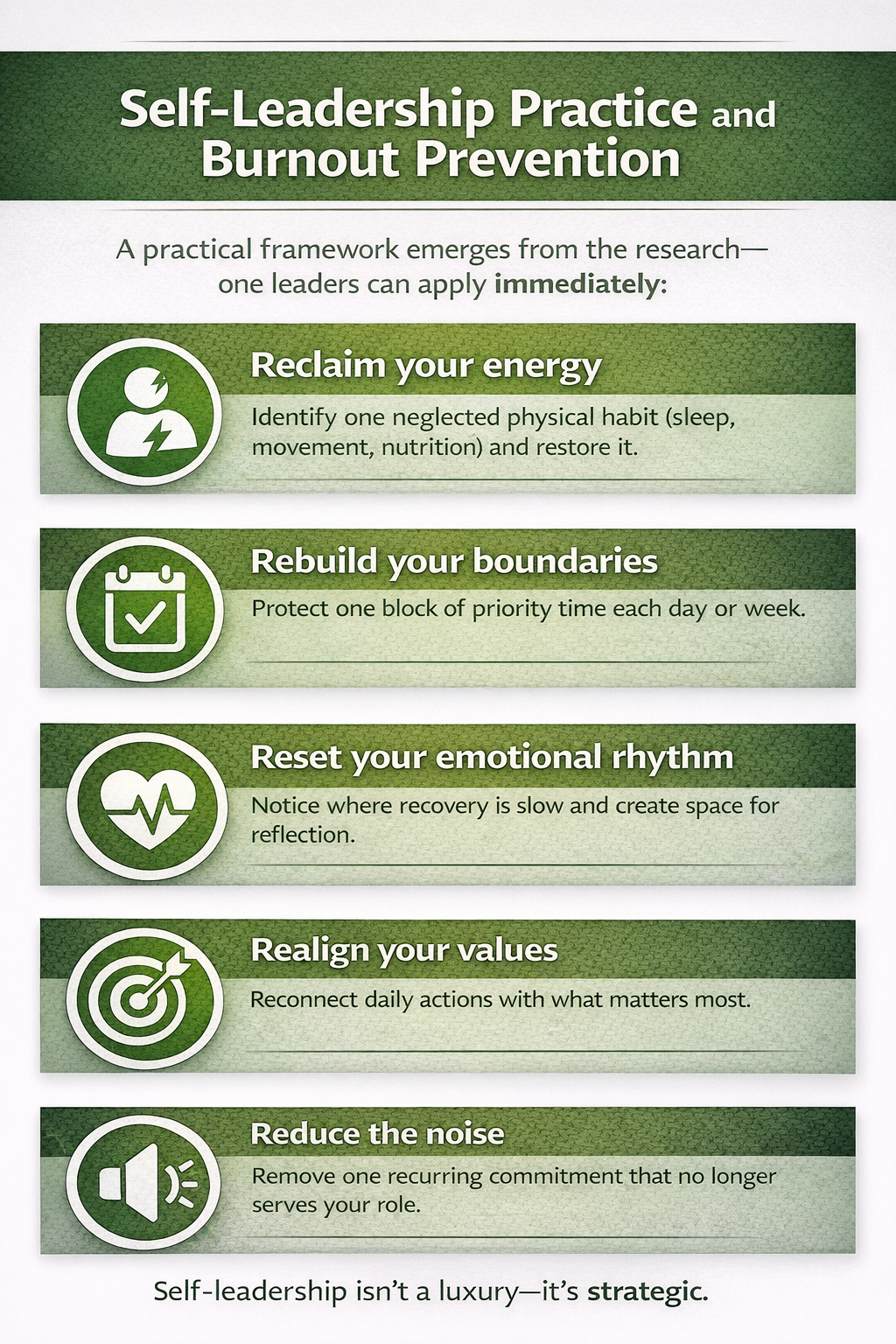
  • Difficulty delegating responsibility and trust

  • Diminished capacity for strategic thinking

  • Erosion of personal boundaries and renewal activities

Most telling was Caleb's admission: "I stress about things that haven't been created yet... even though it hasn't happened, it probably won't happen." This anticipatory anxiety represents the ultimate tax of reactive leadership—expending precious mental resources on scenarios that may never materialize.

The Path to Self-Leadership

The Workflow Audit became a crucial tool in Caleb's transformation. This structured assessment revealed that over 70% of his activities fell into highly reactive categories. More importantly, he identified three practical shifts that would begin his journey toward proactive self-leadership:

  1. Scheduled Disconnection: Turning off his phone from 8 pm to 5 am, three days weekly—creating 27 hours of mental space.

  2. Delegation of Trust: Identifying who could handle responsibilities during his disconnected periods, addressing his fear that "the ball would drop" in his absence.

  3. Renewal Activity: Dedicating four hours weekly to his truck restoration project—an activity that brought genuine joy and engaged his mind differently.

From Individual Change to Cultural Shift

The impact of Caleb's transformation extended beyond his personal wellbeing. As he implemented these changes, his team began mirroring his more proactive stance. His increased clarity and presence enhanced the quality of his interactions. His willingness to disconnect periodically encouraged similar boundary-setting among team members.

This ripple effect demonstrates a crucial principle: organizational culture shifts not primarily through policies but through the modeling of individual leaders who embody a different way of working. As a leader, you have the power to shape your organization's culture.

The Workflow Audit provides a structured path for leaders caught in reactivity to identify small, high-leverage changes that shift the balance toward proactive self-leadership. For Caleb, as for many leaders, this journey began not with grand transformation but with simple permission—permission to lead not just from competence but from wholeness. The Workflow Audit can be your guide in this journey.

Transforming Your Worldview for Better Results

Unsplash @willianjusten

Today, we look at worldview through the lens of results—our expectations for ourselves and others.

Are the expected results ever good enough, fast enough, or high enough? Perhaps these expectations leave an undercurrent of disappointment and constant stress, allowing little room for gratitude. These expectations of results reveal your worldview more clearly than your stated values ever could.

In our previous discussions, we explored how worldview forms the foundation of leadership. Remember our key axiom: worldview, values, beliefs, and style are "more caught than taught." Leaders don't primarily influence through what they explicitly teach but through what others observe in their actions and decisions. Your team catches your worldview through your everyday behaviors—how you respond to challenges, what you prioritize, and where you direct your attention.

The trust statements we make often reveal our deepest worldviews.

Just as the models in our lives and leaders we've admired weren't always perfect, the truisms and assumptions we carry may not always serve us well. Statements like "People need to be closely managed" or "If you want something done right, do it yourself" might feel like proven wisdom, but they invite a pause to reflect on whether these assumptions still support our current leadership goals.

While not an overnight process, the potential for profound changes in leadership effectiveness through worldview transformation is immense. Consider the case of a construction executive I once worked with. For twenty years, he operated under the belief that 'People need constant direction'—a view shaped by his military background and early career experiences. A transformative realization during our program opened up a world of possibilities for him.

His exhausting leadership style involved checking every detail and solving problems his team should have handled themselves. When asked to examine his worldview, he recognized this approach had created dependent team members who waited for instructions rather than thinking independently. The cost was burnout for him and underdevelopment for his team.

His transformation began with a simple shift: "People can rise to challenges when given clear expectations and appropriate support." This wasn't abandoning standards but changing his approach to achieving them. Over six months, he gradually shifted his management style by delegating outcomes rather than processes, implementing regular check-ins instead of constant oversight, asking, "What do you think we should do?" before offering solutions, and explicitly celebrating initiative and problem-solving.

The results were remarkable. His team's capabilities expanded, his stress decreased, and several team members emerged as potential future leaders. Most importantly, he found a sustainable leadership approach that allowed him to focus on strategic priorities.

Worldview transformation follows a reflective pattern that can happen in a moment or maturated over time: awareness of your current beliefs and their impact, examination of these beliefs against evidence, experimentation with new approaches, and integration of new perspectives that yield better results.

Growth requires the courage to question deeply held assumptions, especially those that have brought some measure of success in the past. The most effective leaders continually refine their worldviews as they gain experience and insight. This process of questioning and refining can be empowering, putting you in control of your leadership journey.

Reflection Questions:

  1. What results in your leadership have been disappointing or frustrating?

  2. What worldview belief might be contributing to these outcomes?

  3. What small experiment could you try to test a different approach?

Remember, worldview shifts don't require abandoning your core values. Instead, they examine the assumptions shaping how you express those values in your leadership. The goal isn't to adopt someone else's worldview but to ensure your own genuinely serves your effectiveness as a leader—and your fulfillment as a person.

As you go into your next meeting today, consider that achieving the desired results might be better served by reflecting on your worldview before focusing on behavioral tactics. There's nothing wrong with aspiring toward best practices, but what drives you may not motivate your people.